
Conservative leader Kemi Badenoch threw her personal weight behind the campaign, making three separate visits to Aberdeen in the final weeks of the contest for photo opportunities alongside Scottish Conservative leader Russell Findlay [2]. Badenoch, whose personal approval ratings have risen in recent months, was back at Aberdeen Airport to celebrate the unexpected victory in person [2].
TL:DR – Analysts noted that specific local conditions played a significant role in the outcome. Aberdeen sits at the heart of the North Sea oil and gas industry, and the Conservative campaign centred heavily on job losses linked to the decline of offshore drilling, targeting both Labour and the SNP over their support for net zero policies [2].
Contents
The win came against a damaging backdrop for the SNP. Former SNP chief executive Peter Murrell's guilty plea to embezzlement charges remained fresh in voters' minds during the campaign, with his sentencing due the following week — a factor widely seen as having further damaged the nationalist party's brand [2].
While the party will draw considerable encouragement from the result, commentators cautioned that the particular circumstances of Aberdeen South may not be easily replicated in other constituencies ahead of the next general election [2].
Scottish Conservatives Claim Historic Aberdeen South Victory
The Scottish Conservatives have secured a Westminster by-election victory for the first time in over 50 years, with candidate Douglas Lumsden defeating the SNP comfortably in Aberdeen South [2]. The result marks a remarkable turnaround for a party that had been struggling to find its footing following its heavy losses at the 2024 general election.

Photo: Scottish Parliament — via commons.wikimedia.org — CC BY 3.0

SNP Hold Arbroath and Broughty Ferry Amid Mixed Night
While the Scottish Conservatives celebrated a historic victory in Aberdeen South, the SNP managed to hold on in the other contest of the evening, retaining the Arbroath and Broughty Ferry seat by a decent margin [2]. The result offered the nationalists some relief on what was otherwise a bruising night for the party.
Both by-elections were triggered by the same unusual circumstance: sitting SNP MPs had vacated their Westminster seats in order to take up positions at Holyrood, forcing the contests in the first place [2]. That context made the SNP the defending party in both constituencies, and losing either would have compounded the sense of crisis surrounding John Swinney's leadership.
Despite holding the seat, the SNP will have noted serious warning signs in the Arbroath and Broughty Ferry result. The Conservatives finished second, arriving less than 200 votes ahead of Reform UK in third place [2]. That razor-thin gap between the Tories and Nigel Farage's party underlines the increasingly crowded and volatile nature of Scottish politics, with Reform now a credible presence even north of the border.
Analysts pointed to the Conservative performance in Arbroath as evidence of effective campaign organisation from a party that, by rights, should still be picking itself up off the floor [2]. For the SNP, holding the seat without a strong mandate, and watching rival parties consolidate votes around them, amounts to a warning rather than a vindication. The result adds further pressure on First Minister John Swinney as his party navigates the ongoing fallout from the Peter Murrell embezzlement case [2].
North Sea Oil, Reform UK and the Forces Shaping Scottish Results
The Conservative campaign in Aberdeen South was built around a single, powerful economic anxiety: the steady decline of offshore drilling and the job losses rippling through the city's North Sea oil and gas industry. The party targeted both Labour and the SNP over their continued support for the net zero agenda, framing the election as a direct referendum on energy policy and the livelihoods dependent on it [2]. That message resonated with particular force in Aberdeen, the undisputed heart of Scotland's offshore sector, in a way that party strategists acknowledge will not translate everywhere across the UK [2].
Reform UK, meanwhile, directed much of its campaign energy elsewhere, leaving Scotland as a secondary theatre. Yet the party still managed to finish less than 200 votes behind the Conservatives in the other Scottish contest, Arbroath and Broughty Ferry, underscoring the growing pressure the insurgent party places on traditional Conservative support even when not fully engaged [2].
Labour's performance in both Scottish seats offered its own cautionary signal. The party shed nearly 20 percentage points of its vote share across the two constituencies, a collapse that suggests its national difficulties are compounding in Scotland, where energy policy sits at the centre of working-class economic concern rather than at the fringes of political debate.
With both leading Labour leadership contenders and the SNP First Minister signalling potential movement on net zero, the Conservatives will be watching closely to see whether their energy-focused wedge issue retains its edge — or whether the political ground shifts beneath them before the next general election [2].
A Tale of Two Nations: Scottish and English Politics Diverge
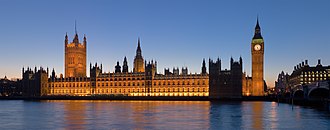
Photo: Diliff — via commons.wikimedia.org — CC BY-SA 2.0

While Labour was consolidating its grip on English constituencies, the political map north of the border told an entirely different story. In Scotland, the defining contest is not between Labour and the Conservatives — it is a battle between the SNP and a resurgent Scottish Conservative Party, and the Aberdeen South by-election result underscored that divide in stark terms.
The Scottish political battleground operates by its own distinct rules. Scottish Labour has largely collapsed as a meaningful force at Westminster level, leaving the Conservatives as the primary unionist alternative to SNP dominance. When Conservative candidate Douglas Lumsden took Aberdeen South from the SNP, it was a reminder that the electoral dynamics shaping English politics — including the rise of Reform UK — play out very differently once you cross the border [2].
Crucially, even in defeat, the Conservatives drew encouragement from the Arbroath and Broughty Ferry by-election, where they came second, finishing less than 200 votes ahead of Reform UK [2]. That near-miss carries significant implications for the next general election, where the central tactical question will be whether voters who want to remove a Labour MP view the Tories or Reform as the more credible vehicle for doing so.
Conservative leader Kemi Badenoch made multiple visits to Aberdeen during the campaign, and the party tested its anti-Reform tactical voting pitch against the SNP rather than Labour [2]. Party strategists will study these results carefully, aware that the lessons from Scotland may not translate directly to English constituencies — but the discipline and organisation the Scottish Conservatives demonstrated offers a template worth examining as the next general election approaches.